
We all know what is stress, we have all experienced so called “fight or flight” response. Every time we feel physically or emotionally threatened the autonomic nervous system shifts into emergency rescue mode.
But if the nervous system is constantly stimulated, the body does not have an opportunity to rest and heal and in such case, it is necessary to find an effective way to unwind and relax because otherwise we might lose our health.
There are many methods which are used for relaxation and stress relieve and yoga pose Shavasana is one of them.
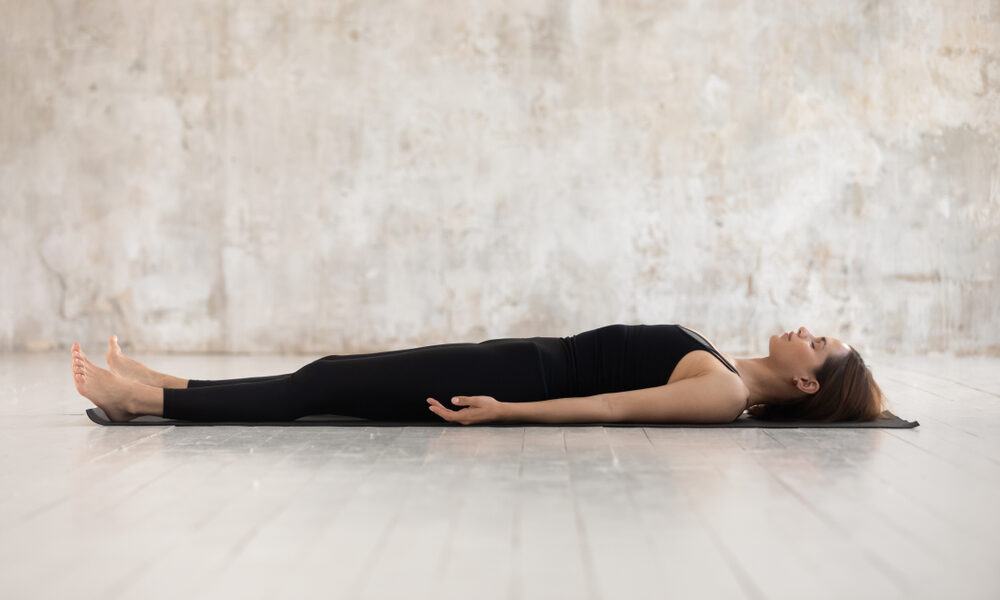
Shavasana or the corpse pose works wonders in terms of relaxation, because it can help the nervous system to make the shift back to its restorative mode.
When our bodies are in this position and we are paying attention to our breath, we can experience deep relaxation and calm our mind and our nervous system.
As we are doing this practice, all the tension drains from muscles governed by the autonomic nervous system, giving us access to the energy that was stuck before and because of that we feel refreshed and renewed after this relaxation exercise.
Sometimes this newly available energy can even move us beyond our normal awareness, and free us from our defense mechanisms, thus giving us access to the unconscious, and allowing the creative aspect of our beings to be awakened.
This type of deep relaxation requires trust, because in the corpse pose, the front of the body and the vital organs are exposed and vulnerable, and our eyes are closed, making it impossible to “keep an eye” on things round us, even if we wanted to.
The aim during this practice is to be fully aware of the present moment, but the consciousness may change in another realm where our mind is alert and watchful, but at the same time is steady and still.
The result is a powerful refreshment for the mental and physical aspects of our being, and stress relief is guaranteed.
Maybe one of the greatest things about shavasana is that you do not need to join any yoga club, because you can do it in the privacy of your home!
And here is how:
Find a quiet space and choose a time when you won’t be interrupted or disturbed.
Sit on the mat with your legs straight out in front of you and begin lowering the spine to the floor, when the full length of the body is supported by the floor, relax the legs and let the feet turn out naturally. If the lower back is uncomfortable, support the back of the knees with a pillow, or bend the knees and rest them against each other.
Start the relaxation practice from your feet, moving slowly upwards. Relax your calves, knees, whole legs, moving up to genitals, lower abdomen, chest etc.
Try to stay as relaxed as possible, keep the shoulders down, flat on the floor. The arms should be away from the sides of the body so that the inner upper arm does not touch the chest. The palms of the hands should always face upward, with the fingers curling naturally.
Keep your eyes closed. The other senses should also be quieted and turned inward by completely relaxing the neck, face and jaw.
After a few minutes, inspect if there is any tension left in your body, if so try to release it slowly and remain calm without any movement.
Your mind should be still, if any thoughts arise do not fight them, just let them pass by.
A simple, and very effective technique for quieting the mind is to focus all your attention to the breath.
As you inhale and exhale the respiration rate will slow down naturally.
During deep relaxation, similar as in sleep, the metabolism slows down and you may become chilly, so it is a good idea to cover your body with a light blanket even before you start your practice.
It may sound easy but the tricky part is that deep relaxation will not take place until the mind is peaceful.
And this small detail makes shavasana more difficult than you might suspect.
There are several relaxation exercises that can help release tension in the body and quiet the busy mind which you can do during this practice to speed up the relaxation.
One is to deliberately create tension in the body by amplifying the existing tension. For example, first you tense the part of the body, by squeezing all the muscles and then relax that part, relaxation naturally follows.
Another relaxation exercise is to concentrate the mind to specific parts of the body, moving from the head to the toes and back to the head again.
You can stay in shavasana about 20 minutes and then move out of it, very slowly and gently.
Gradually allow your senses and mind to become aware of the external world while maintaining the peace and stillness of the inner world. When you are ready to move, wiggle the fingers and toes, because wiggling them stimulates energy along the meridians, thus activating the major organs through which the meridians pass, and signaling the body that a new state of consciousness is beginning.
It may take some time to reach a state of deep relaxation and awareness, but it will become easier with practice. If this posture is done regularly, the resulting balance in the nervous system and body and mind will relieve all the stress and tension, help with respiratory ailments, high blood pressure, and digestive disorders, and aid in recovery from illness or injury.
Once you have experienced the new state of consciousness that arises as the usually outwardly directed energy flows inward to heal and revitalize the body and mind, you’ll be inspired to repeat your practice on and on again.